An Examination Security Meeting Was Held at Mersin University Faculty of Medicine
Examination Security Meeting Held at Mersin University Faculty of Medicine
A meeting was held at Mersin University Faculty of Medicine to evaluate examination security, which is an important component of education and training processes, and to strengthen reliable assessment and evaluation practices in examinations.
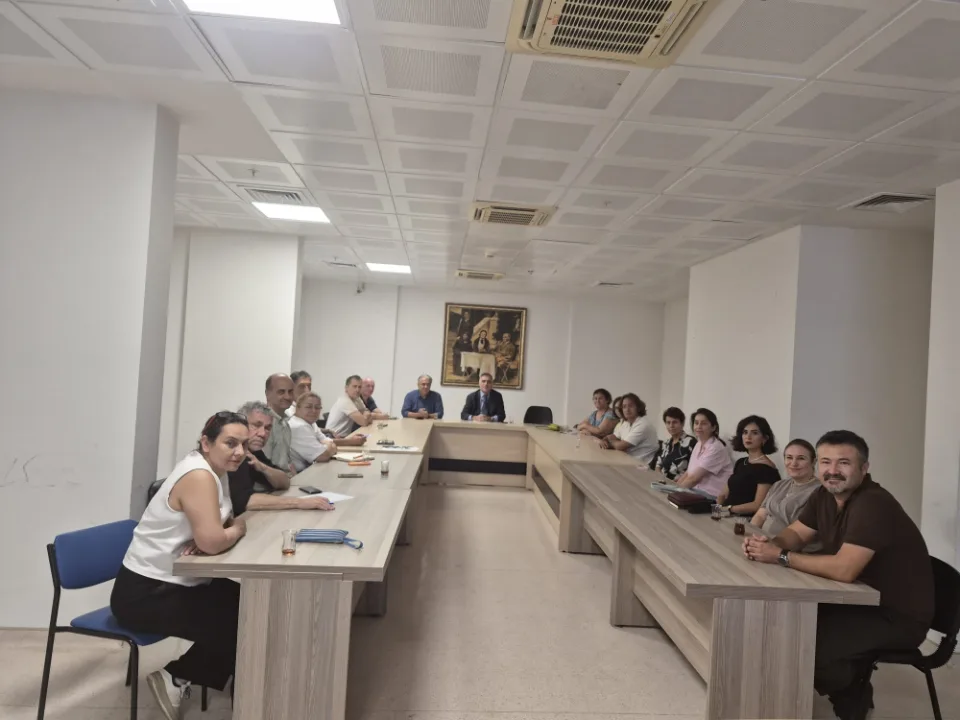
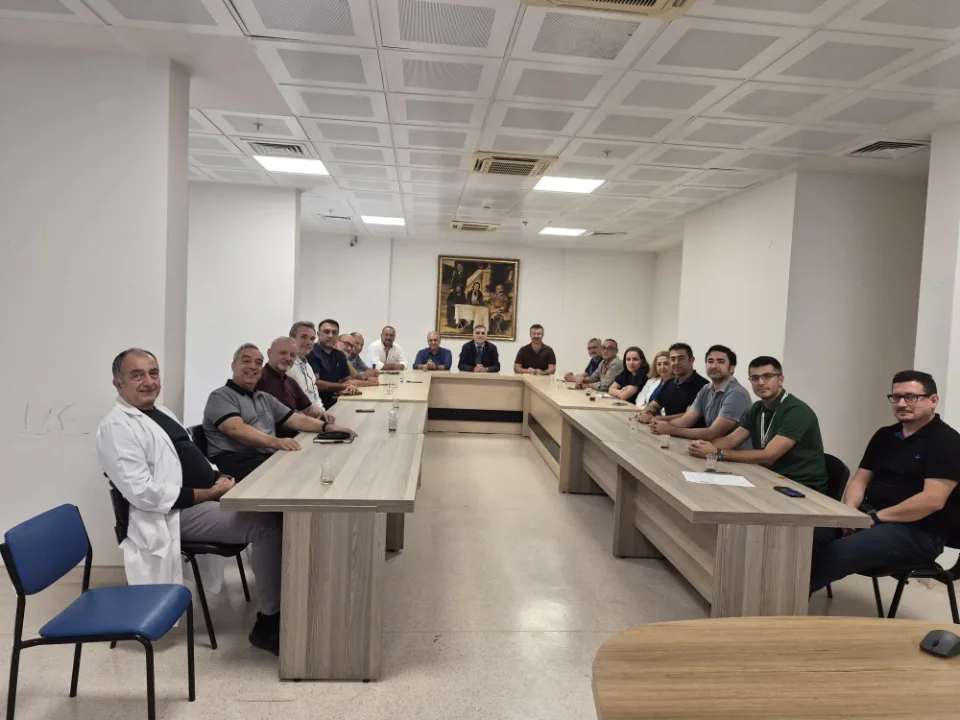
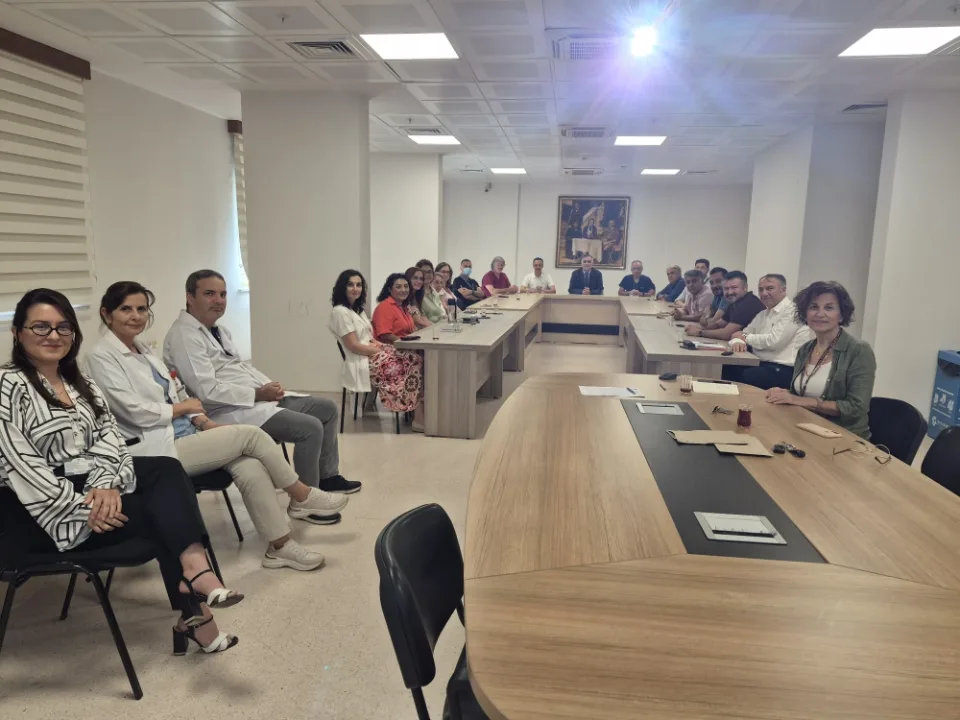
The meeting, held on September 17, 2026, in the Ground Floor Meeting Hall of the Dean’s Office of Mersin University Faculty of Medicine, was attended by the Heads of Departments/Divisions of Surgical Sciences, Internal Sciences, and Basic Medical Sciences, as well as faculty members responsible for education.
In his opening remarks, Dean of the Faculty of Medicine, Prof. Dr. Murat Ünal, emphasized that examination security is not only an essential component of assessment and evaluation processes but also an important part of the fundamental values of medical education.
Prof. Dr. Ünal stated that honesty and reliability are among the fundamental attitudes that medical students should acquire, emphasizing that individuals should first be honest with themselves and then with those around them. Noting that the medical profession is built upon a relationship of trust, Prof. Dr. Ünal underlined that ethical values acquired during medical education directly influence professional life.
Prof. Dr. Ünal stated that disciplinary proceedings were initiated against a total of 10 Period II and Period III students due to inappropriate behaviors during examinations in the 2025–2026 Academic Year. He noted that, in a significant proportion of these cases, it was necessary to impose disciplinary sanctions, including reprimands or suspensions. Emphasizing that such incidents have serious consequences for students, faculty members, and the Faculty as a whole, Prof. Dr. Ünal highlighted the importance of preventive and educational approaches in ensuring examination security.
During the meeting, Assoc. Prof. Dr. Hüseyin Selvi, a faculty member of the Department of Medical Education and an Assessment and Evaluation Specialist, was invited to provide information on current risks to examination security and possible preventive measures.
In his presentation titled “Examination Security: Next-Generation Cheating Methods and Prevention Approaches,” Assoc. Prof. Dr. Selvi addressed emerging risks to examination security associated with technological developments. The presentation emphasized that the goal is not to compete with technology, but rather to strengthen examination security, identify emerging risks, and establish practical preventive measures through a common approach.
The presentation addressed current risk areas, including wearable technologies, miniature cameras, audio transmission, and covert communication. It was emphasized that checking only for mobile phones is no longer sufficient to address the full range of examination security risks. At the same time, it was underlined that not every unusual behavior observed during an examination should be considered cheating on its own, and that observation should be distinguished from evidence.
The meeting also addressed the measures and practices implemented at the Faculty over time to improve examination security. In addition to technological tools, the importance of fundamental measures such as a well-organized examination room, an adequate number of invigilators, appropriate seating arrangements, different question booklets or examination formats, keeping electronic devices outside the examination room, providing clear information before examinations, maintaining a robust incident reporting and documentation system, and implementing standardized procedures in suspicious situations was emphasized.
The meeting also considered the implementation of a brief and standardized security routine before the start of examinations. It was noted that communicating the same rules in the same language and manner across all examination rooms would contribute not only to examination security but also to preventing potential disputes.
At the conclusion of the meeting, it was emphasized that examination security can be strengthened not only through technical measures but also through an integrated approach addressing human and process-oriented factors, including clear rules, consistency in implementation, an adequate number of invigilators, rapid communication, and standardized documentation of incidents.
As Mersin University Faculty of Medicine, the importance of continuing efforts to create an educational environment that contributes to the development of students not only as competent physicians with professional knowledge and skills, but also as physicians who embrace honesty, reliability, and professional ethical values, was emphasized.
Photo Gallery